


Page 330 - ISC PROCEEDINGS 21.4
P. 330
SMEs primarily as a means to strengthen business performance. Digital channels,
                  platform-based interaction and data-supported operations appear to help firms reach
                  customers more effectively and improve their competitive position in the market.
                        By contrast, the dimensions linked more closely to governance and sustainability
                  are slightly lower, though still positive. Improving transparency, governance quality and
                  customer service receives a score of 4.03, while saving resources, reducing paperwork
                  and minimizing waste is rated at 4.02. These results suggest that firms do recognize the
                  broader value of digital transformation beyond immediate financial returns. However,
                  those benefits are often indirect and may not yet be systematically planned or measured.
                        The lowest-rated item is supporting firms in monitoring social and environmental
                  goals, at 4.01. Although the score remains favorable, it indicates that this aspect is the
                  least clearly embedded in enterprise practice. In other words, many SMEs appear to use
                  digital transformation primarily to improve efficiency and competitiveness, while the use
                  of digital technologies as tools for managing social and environmental performance
                  remains limited.
                        This finding is highly consistent with the Triple Bottom Line perspective. The
                  empirical evidence suggests that digital transformation contributes most clearly to the
                  economic pillar of sustainability, while its contribution to the social and environmental
                  pillars is weaker and more indirect. It is also consistent with dynamic capability theory,
                  because the broader sustainability value of digital transformation depends not only on
                  adopting technology but on whether firms can strategically align digital initiatives with
                  longer-term developmental objectives.
                        The causal mechanism implied by the results is therefore more nuanced than a
                  simple statement that digital transformation improves sustainability. What the data
                  suggest is that digital transformation first enhances information flow, efficiency, control
                  and market reach. These improvements may then create enabling conditions for better
                  governance, more transparent stakeholder relations and more efficient resource use.
                  However, unless enterprises intentionally integrate sustainability goals into their digital
                  agenda, the social and environmental effects of digital transformation are likely to remain
                  secondary rather than central.
                        3.4. The role of adaptability and innovation in linking digital transformation with
                  sustainable development


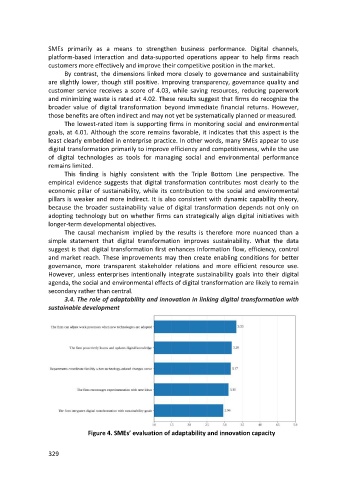
                                Figure 4. SMEs’ evaluation of adaptability and innovation capacity


                  329

