


Page 327 - ISC PROCEEDINGS 21.4
P. 327
reading of the results indicates that this foundation is uneven. Strategic awareness and
                  leadership commitment appear stronger than the deeper organizational capacities
                  needed to sustain transformation over time.


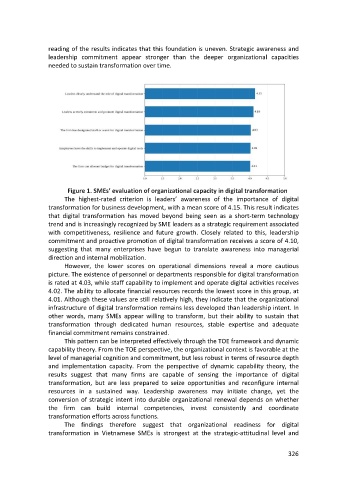
                         Figure 1. SMEs’ evaluation of organizational capacity in digital transformation
                        The highest-rated criterion is leaders’ awareness of the importance of digital
                  transformation for business development, with a mean score of 4.15. This result indicates
                  that digital transformation has moved beyond being seen as a short-term technology
                  trend and is increasingly recognized by SME leaders as a strategic requirement associated
                  with competitiveness, resilience and future growth. Closely related to this, leadership
                  commitment and proactive promotion of digital transformation receives a score of 4.10,
                  suggesting that many enterprises have begun to translate awareness into managerial
                  direction and internal mobilization.
                        However, the lower scores on operational dimensions reveal a more cautious
                  picture. The existence of personnel or departments responsible for digital transformation
                  is rated at 4.03, while staff capability to implement and operate digital activities receives
                  4.02. The ability to allocate financial resources records the lowest score in this group, at
                  4.01. Although these values are still relatively high, they indicate that the organizational
                  infrastructure of digital transformation remains less developed than leadership intent. In
                  other words, many SMEs appear willing to transform, but their ability to sustain that
                  transformation through dedicated human resources, stable expertise and adequate
                  financial commitment remains constrained.
                        This pattern can be interpreted effectively through the TOE framework and dynamic
                  capability theory. From the TOE perspective, the organizational context is favorable at the
                  level of managerial cognition and commitment, but less robust in terms of resource depth
                  and implementation capacity. From the perspective of dynamic capability theory, the
                  results suggest that many firms are capable of sensing the importance of digital
                  transformation, but are less prepared to seize opportunities and reconfigure internal
                  resources in a sustained way. Leadership awareness may initiate change, yet the
                  conversion of strategic intent into durable organizational renewal depends on whether
                  the firm can build internal competencies, invest consistently and coordinate
                  transformation efforts across functions.
                        The findings therefore suggest that organizational readiness for digital
                  transformation in Vietnamese SMEs is strongest at the strategic-attitudinal level and


                                                                                                      326

