


Page 552 - ISC PROCEEDINGS 21.4
P. 552
companies, production cost control is currently quite simple and ineffective due to their
                  cumbersome organizational structure, wide scope of operations, and limited
                  technological infrastructure.
                        According to the National Green Growth Strategy for the period 2021-2030,
                  Vietnam aims to reduce greenhouse gas emissions in the transportation sector by at least
                  30% by 2030. Electric and clean energy vehicles are among the key components of this
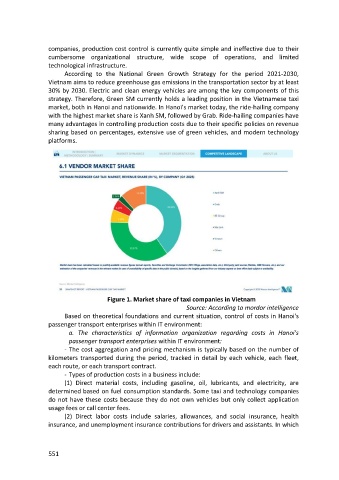
                  strategy. Therefore, Green SM currently holds a leading position in the Vietnamese taxi
                  market, both in Hanoi and nationwide. In Hanoi’s market today, the ride-hailing company
                  with the highest market share is Xanh SM, followed by Grab. Ride-hailing companies have
                  many advantages in controlling production costs due to their specific policies on revenue
                  sharing based on percentages, extensive use of green vehicles, and modern technology
                  platforms.


                                       Figure 1. Market share of taxi companies in Vietnam
                                                                  Source: According to mordor intelligence
                        Based on theoretical foundations and current situation, control of costs in Hanoi's
                  passenger transport enterprises within IT environment:
                         a. The characteristics of information organization regarding costs in Hanoi's
                         passenger transport enterprises within IT environment:
                        - The cost aggregation and pricing mechanism is typically based on the number of
                  kilometers transported during the period, tracked in detail by each vehicle, each fleet,
                  each route, or each transport contract.
                        - Types of production costs in a business include:
                        (1) Direct material costs, including gasoline, oil, lubricants, and electricity, are
                  determined based on fuel consumption standards. Some taxi and technology companies
                  do not have these costs because they do not own vehicles but only collect application
                  usage fees or call center fees.
                        (2) Direct labor costs include salaries, allowances, and social insurance, health
                  insurance, and unemployment insurance contributions for drivers and assistants. In which


                  551

