


Page 470 - ISC PROCEEDINGS 21.4
P. 470
is insufficient to shape favorable attitudes toward preventive health behaviors such as
                  using family doctor services.
                        Additionally, perceived severity was found to have a positive influence on attitude
                  toward health behavior (β = 0.258, p < 0.001), providing strong support for H2. This
                  finding indicates that greater awareness of the seriousness and potential consequences of
                  health problems strengthens positive evaluations of engaging in preventive healthcare.
                        Consistent with expectations, perceived benefits exhibited a significant positive
                  effect on attitude (β = 0.235, p < 0.001), supporting H3. This result highlights the
                  importance of recognizing the benefits of family doctor services, including early diagnosis,
                  continuity of care, and long-term health management, in shaping favorable attitudes.
                        In contrast, perceived barriers demonstrated a significant negative effect on
                  attitude toward health behavior (β = -0.231, p < 0.001). Thus, H4 was supported in the
                  hypothesized direction. This finding implies that concerns related to cost, accessibility,
                  time constraints, or trust in service quality weaken positive evaluations of family doctor
                  utilization.
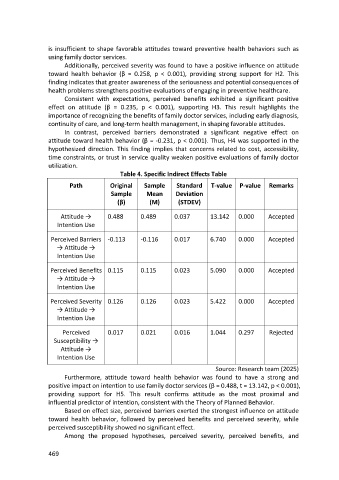
                                           Table 4. Specific Indirect Effects Table

                         Path           Original    Sample     Standard    T-value   P-value   Remarks
                                        Sample      Mean       Deviation
                                          (β)         (M)       (STDEV)

                      Attitude →       0.488      0.489       0.037        13.142    0.000     Accepted
                     Intention Use

                   Perceived Barriers -0.113      -0.116      0.017        6.740     0.000     Accepted
                     → Attitude →
                     Intention Use

                   Perceived Benefits 0.115       0.115       0.023        5.090     0.000     Accepted
                     → Attitude →
                     Intention Use

                   Perceived Severity 0.126       0.126       0.023        5.422     0.000     Accepted
                     → Attitude →
                     Intention Use

                       Perceived       0.017      0.021       0.016        1.044     0.297      Rejected
                    Susceptibility →
                      Attitude →
                     Intention Use

                                                                             Source: Research team (2025)
                        Furthermore, attitude toward health behavior was found to have a strong and
                  positive impact on intention to use family doctor services (β = 0.488, t = 13.142, p < 0.001),
                  providing support for H5. This result confirms attitude as the most proximal and
                  influential predictor of intention, consistent with the Theory of Planned Behavior.
                        Based on effect size, perceived barriers exerted the strongest influence on attitude
                  toward health behavior, followed by perceived benefits and perceived severity, while
                  perceived susceptibility showed no significant effect.
                        Among the proposed hypotheses, perceived severity, perceived benefits, and


                  469

