


Page 298 - ISC PROCEEDINGS 21.4
P. 298
segments containing these terms. This approach enables granular understanding of
                  satisfaction drivers across multiple product dimensions.
                        4. Results and discussion
                        4.1. Overall sentiment distribution
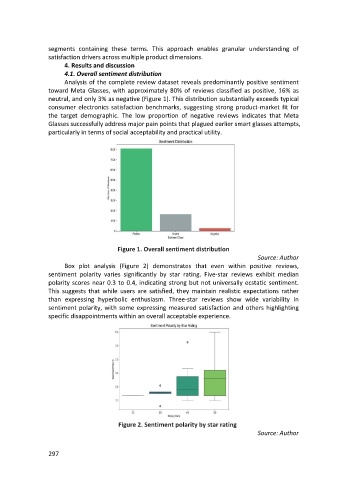
                        Analysis of the complete review dataset reveals predominantly positive sentiment
                  toward Meta Glasses, with approximately 80% of reviews classified as positive, 16% as
                  neutral, and only 3% as negative (Figure 1). This distribution substantially exceeds typical
                  consumer electronics satisfaction benchmarks, suggesting strong product-market fit for
                  the target demographic. The low proportion of negative reviews indicates that Meta
                  Glasses successfully address major pain points that plagued earlier smart glasses attempts,
                  particularly in terms of social acceptability and practical utility.


                                          Figure 1. Overall sentiment distribution
                                                                                            Source: Author
                        Box plot analysis (Figure 2) demonstrates that even within positive reviews,
                  sentiment polarity varies significantly by star rating. Five-star reviews exhibit median
                  polarity scores near 0.3 to 0.4, indicating strong but not universally ecstatic sentiment.
                  This suggests that while users are satisfied, they maintain realistic expectations rather
                  than expressing hyperbolic enthusiasm. Three-star reviews show wide variability in
                  sentiment polarity, with some expressing measured satisfaction and others highlighting
                  specific disappointments within an overall acceptable experience.


                                           Figure 2. Sentiment polarity by star rating
                                                                                            Source: Author


                  297

