


Page 192 - ISC PROCEEDINGS 21.4
P. 192
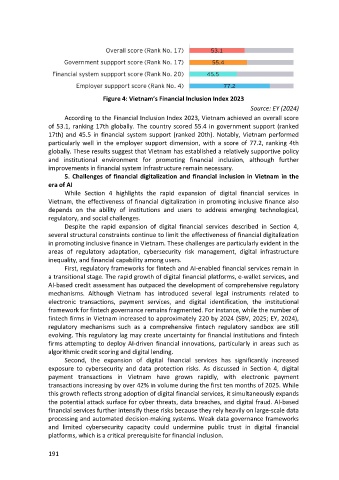
Figure 4: Vietnam’s Financial Inclusion Index 2023

                                                                                         Source: EY (2024)
                        According to the Financial Inclusion Index 2023, Vietnam achieved an overall score
                  of 53.1, ranking 17th globally. The country scored 55.4 in government support (ranked
                  17th) and 45.5 in financial system support (ranked 20th). Notably, Vietnam performed
                  particularly well in the employer support dimension, with a score of 77.2, ranking 4th
                  globally. These results suggest that Vietnam has established a relatively supportive policy
                  and institutional environment for promoting financial inclusion, although further
                  improvements in financial system infrastructure remain necessary.
                        5. Challenges of financial digitalization and financial inclusion in Vietnam in the
                  era of AI
                        While Section 4 highlights the rapid expansion of digital financial services in
                  Vietnam, the effectiveness of financial digitalization in promoting inclusive finance also
                  depends on the ability of institutions and users to address emerging technological,
                  regulatory, and social challenges.
                        Despite the rapid expansion of digital financial services described in Section 4,
                  several structural constraints continue to limit the effectiveness of financial digitalization
                  in promoting inclusive finance in Vietnam. These challenges are particularly evident in the
                  areas of regulatory adaptation, cybersecurity risk management, digital infrastructure
                  inequality, and financial capability among users.
                        First, regulatory frameworks for fintech and AI-enabled financial services remain in
                  a transitional stage. The rapid growth of digital financial platforms, e-wallet services, and
                  AI-based credit assessment has outpaced the development of comprehensive regulatory
                  mechanisms. Although Vietnam has introduced several legal instruments related to
                  electronic transactions, payment services, and digital identification, the institutional
                  framework for fintech governance remains fragmented. For instance, while the number of
                  fintech firms in Vietnam increased to approximately 220 by 2024 (SBV, 2025; EY, 2024),
                  regulatory mechanisms such as a comprehensive fintech regulatory sandbox are still
                  evolving. This regulatory lag may create uncertainty for financial institutions and fintech
                  firms attempting to deploy AI-driven financial innovations, particularly in areas such as
                  algorithmic credit scoring and digital lending.
                        Second, the expansion of digital financial services has significantly increased
                  exposure to cybersecurity and data protection risks. As discussed in Section 4, digital
                  payment transactions in Vietnam have grown rapidly, with electronic payment
                  transactions increasing by over 42% in volume during the first ten months of 2025. While
                  this growth reflects strong adoption of digital financial services, it simultaneously expands
                  the potential attack surface for cyber threats, data breaches, and digital fraud. AI-based
                  financial services further intensify these risks because they rely heavily on large-scale data
                  processing and automated decision-making systems. Weak data governance frameworks
                  and limited cybersecurity capacity could undermine public trust in digital financial
                  platforms, which is a critical prerequisite for financial inclusion.


                  191

