


Page 685 - ISC PROCEEDINGS 21.4
P. 685
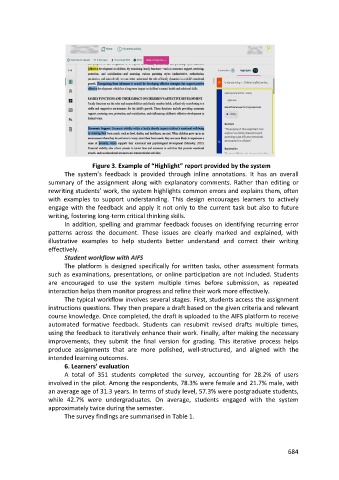
Figure 3. Example of “Highlight” report provided by the system
                        The system’s feedback is provided through inline annotations. It has an overall
                  summary of the assignment along with explanatory comments. Rather than editing or
                  rewriting students’ work, the system highlights common errors and explains them, often
                  with examples to support understanding. This design encourages learners to actively
                  engage with the feedback and apply it not only to the current task but also to future
                  writing, fostering long-term critical thinking skills.
                        In addition, spelling and grammar feedback focuses on identifying recurring error
                  patterns across the document. These issues are clearly marked and explained, with
                  illustrative examples to help students better understand and correct their writing
                  effectively.
                        Student workflow with AIFS
                        The platform is designed specifically for written tasks, other assessment formats
                  such as examinations, presentations, or online participation are not included. Students
                  are encouraged to use the system multiple times before submission, as repeated
                  interaction helps them monitor progress and refine their work more effectively.
                        The typical workflow involves several stages. First, students access the assignment
                  instructions questions. They then prepare a draft based on the given criteria and relevant
                  course knowledge. Once completed, the draft is uploaded to the AIFS platform to receive
                  automated formative feedback. Students can resubmit revised drafts multiple times,
                  using the feedback to iteratively enhance their work. Finally, after making the necessary
                  improvements, they submit the final version for grading. This iterative process helps
                  produce assignments that are more polished, well-structured, and aligned with the
                  intended learning outcomes.
                        6. Learners’ evaluation
                        A total of 351 students completed the survey, accounting for 28.2% of users
                  involved in the pilot. Among the respondents, 78.3% were female and 21.7% male, with
                  an average age of 31.3 years. In terms of study level, 57.3% were postgraduate students,
                  while 42.7% were undergraduates. On average, students engaged with the system
                  approximately twice during the semester.
                        The survey findings are summarised in Table 1.


                                                                                                      684

