


Page 530 - ISC PROCEEDINGS 21.4
P. 530
Data collection was conducted using both online and offline methods. The online
                  questionnaire was designed using Google Forms and distributed through various channels,
                  including personal emails, social media platforms such as Facebook and Zalo, and online
                  communities related to consumption and finance. In addition, a portion of the
                  questionnaires was administered directly at selected public locations and universities in
                  Hanoi to enhance the diversity of the sample. A total of 400 questionnaires were
                  distributed; after removing invalid responses, 318 valid responses were retained for
                  analysis.
                        The sample size meets the minimum requirements for quantitative analyses such as
                  factor analysis and multiple regression, as the number of observations should be at least
                  five times the number of observed variables and not less than 200 to ensure the reliability
                  of Exploratory Factor Analysis (EFA) (Hair et al., 2010). All variables were measured using
                  a 5-point Likert scale ranging from 1 (“Strongly disagree”) to 5 (“Strongly agree”).
                        The collected data were processed using SPSS 20 through several key analytical
                  steps, including reliability testing using Cronbach’s Alpha, Exploratory Factor Analysis (EFA)
                  to assess convergent and discriminant validity of the measurement scales, and multiple
                  linear regression analysis (OLS) to test the proposed research hypotheses.
                        4. Research results
                        4.1. Descriptive statistics of the sample
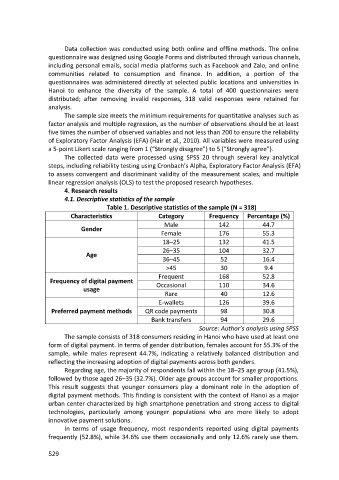
                                      Table 1. Descriptive statistics of the sample (N = 318)
                          Characteristics                Category         Frequency     Percentage (%)
                                                           Male               142            44.7
                              Gender
                                                          Female              176            55.3
                                                          18–25               132            41.5
                                                          26–35               104            32.7
                               Age
                                                          36–45               52             16.4
                                                           >45                30              9.4
                                                         Frequent             168            52.8
                   Frequency of digital payment         Occasional            110            34.6
                              usage
                                                           Rare               40             12.6
                                                         E-wallets            126            39.6
                   Preferred payment methods        QR code payments          98             30.8
                                                      Bank transfers          94             29.6
                                                                       Source: Author’s analysis using SPSS
                        The sample consists of 318 consumers residing in Hanoi who have used at least one
                  form of digital payment. In terms of gender distribution, females account for 55.3% of the
                  sample, while males represent 44.7%, indicating a relatively balanced distribution and
                  reflecting the increasing adoption of digital payments across both genders.
                        Regarding age, the majority of respondents fall within the 18–25 age group (41.5%),
                  followed by those aged 26–35 (32.7%). Older age groups account for smaller proportions.
                  This result suggests that younger consumers play a dominant role in the adoption of
                  digital payment methods. This finding is consistent with the context of Hanoi as a major
                  urban center characterized by high smartphone penetration and strong access to digital
                  technologies, particularly among younger populations who are more likely to adopt
                  innovative payment solutions.
                        In terms of usage frequency, most respondents reported using digital payments
                  frequently (52.8%), while 34.6% use them occasionally and only 12.6% rarely use them.

                  529

