


Page 431 - ISC PROCEEDINGS 21.4
P. 431
< 0.001), supporting H5 and H8.
                        Mooring factors negatively affect Switching Intention and negatively moderate the
                  impact of Pull factors on the Switching Intention to AI-assisted healthcare (p < 0.001),
                  supporting H2 and H4.
                        The model explains 71.2% of the variance in Switching Intention (R² = 0.712),
                  indicating strong explanatory power. The remaining 28.8% of the variance in the
                  switching intention can be attributed to other factors not captured in the research model
                  or to random measurement error.
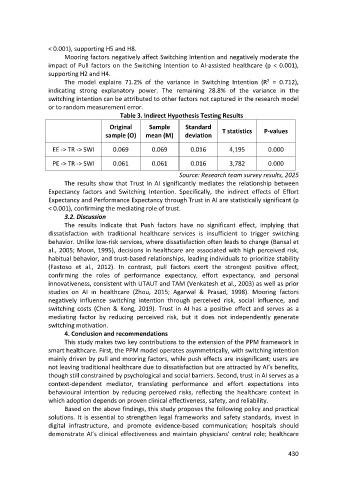
                                           Table 3. Indirect Hypothesis Testing Results

                                        Original     Sample       Standard     T statistics   P-values
                                      sample (O)    mean (M)      deviation

                   EE -> TR -> SWI       0.069        0.069         0.016         4,195        0.000

                   PE -> TR -> SWI       0.061        0.061         0.016         3,782        0.000
                                                                Source: Research team survey results, 2025
                        The results show that Trust in AI significantly mediates the relationship between
                  Expectancy factors and Switching Intention. Specifically, the indirect effects of Effort
                  Expectancy and Performance Expectancy through Trust in AI are statistically significant (p
                  < 0.001), confirming the mediating role of trust.
                        3.2. Discussion
                        The results indicate that Push factors have no significant effect, implying that
                  dissatisfaction with traditional healthcare services is insufficient to trigger switching
                  behavior. Unlike low-risk services, where dissatisfaction often leads to change (Bansal et
                  al., 2005; Moon, 1995), decisions in healthcare are associated with high perceived risk,
                  habitual behavior, and trust-based relationships, leading individuals to prioritize stability
                  (Fastoso et al., 2012). In contrast, pull factors exert the strongest positive effect,
                  confirming the roles of performance expectancy, effort expectancy, and personal
                  innovativeness, consistent with UTAUT and TAM (Venkatesh et al., 2003) as well as prior
                  studies on AI in healthcare (Zhou, 2015; Agarwal & Prasad, 1998). Mooring factors
                  negatively influence switching intention through perceived risk, social influence, and
                  switching costs (Chen & Keng, 2019). Trust in AI has a positive effect and serves as a
                  mediating factor by reducing perceived risk, but it does not independently generate
                  switching motivation.
                        4. Conclusion and recommendations
                        This study makes two key contributions to the extension of the PPM framework in
                  smart healthcare. First, the PPM model operates asymmetrically, with switching intention
                  mainly driven by pull and mooring factors, while push effects are insignificant; users are
                  not leaving traditional healthcare due to dissatisfaction but are attracted by AI’s benefits,
                  though still constrained by psychological and social barriers. Second, trust in AI serves as a
                  context-dependent mediator, translating performance and effort expectations into
                  behavioural intention by reducing perceived risks, reflecting the healthcare context in
                  which adoption depends on proven clinical effectiveness, safety, and reliability.
                        Based on the above findings, this study proposes the following policy and practical
                  solutions. It is essential to strengthen legal frameworks and safety standards, invest in
                  digital infrastructure, and promote evidence-based communication; hospitals should
                  demonstrate AI’s clinical effectiveness and maintain physicians’ central role; healthcare


                                                                                                      430

