


Page 235 - ISC PROCEEDINGS 21.4
P. 235
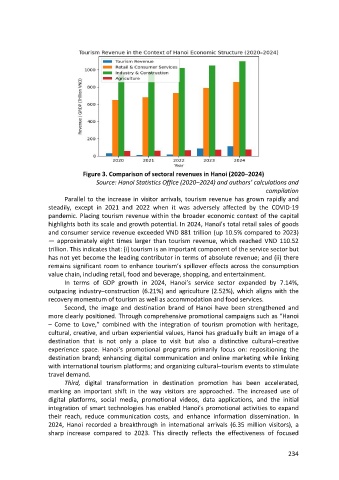
Figure 3. Comparison of sectoral revenues in Hanoi (2020–2024)
                                   Source: Hanoi Statistics Office (2020–2024) and authors’ calculations and
                                                                                              compilation
                        Parallel to the increase in visitor arrivals, tourism revenue has grown rapidly and
                  steadily, except in 2021 and 2022 when it was adversely affected by the COVID-19
                  pandemic. Placing tourism revenue within the broader economic context of the capital
                  highlights both its scale and growth potential. In 2024, Hanoi’s total retail sales of goods
                  and consumer service revenue exceeded VND 881 trillion (up 10.5% compared to 2023)
                  — approximately eight times larger than tourism revenue, which reached VND 110.52
                  trillion. This indicates that: (i) tourism is an important component of the service sector but
                  has not yet become the leading contributor in terms of absolute revenue; and (ii) there
                  remains significant room to enhance tourism’s spillover effects across the consumption
                  value chain, including retail, food and beverage, shopping, and entertainment.
                        In terms of GDP growth in 2024, Hanoi’s service sector expanded by 7.14%,
                  outpacing industry–construction (6.21%) and agriculture (2.52%), which aligns with the
                  recovery momentum of tourism as well as accommodation and food services.
                        Second, the image and destination brand of Hanoi have been strengthened and
                  more clearly positioned. Through comprehensive promotional campaigns such as “Hanoi
                  – Come to Love,” combined with the integration of tourism promotion with heritage,
                  cultural, creative, and urban experiential values, Hanoi has gradually built an image of a
                  destination that is not only a place to visit but also a distinctive cultural–creative
                  experience space. Hanoi’s promotional programs primarily focus on: repositioning the
                  destination brand; enhancing digital communication and online marketing while linking
                  with international tourism platforms; and organizing cultural–tourism events to stimulate
                  travel demand.
                        Third, digital transformation in destination promotion has been accelerated,
                  marking an important shift in the way visitors are approached. The increased use of
                  digital platforms, social media, promotional videos, data applications, and the initial
                  integration of smart technologies has enabled Hanoi’s promotional activities to expand
                  their reach, reduce communication costs, and enhance information dissemination. In
                  2024, Hanoi recorded a breakthrough in international arrivals (6.35 million visitors), a
                  sharp increase compared to 2023. This directly reflects the effectiveness of focused


                                                                                                      234

