


Page 205 - ISC PROCEEDINGS 21.4
P. 205
Comparing the three-layer capability structure: from e-government to AI
                  readiness
                        To assess the transition from e-government toward AI-enabled governance in a
                  systematic way, the study standardizes the three capability layers onto a common 0–1
                  scale. Since EGDI 2024 and the GovTech Maturity Index (GTMI) 2025 are already reported
                  on a 0–1 scale, their values are retained as originally published. For the Government AI
                  Readiness Index 2025, the composite score reported by Oxford Insights is converted to
                  the same scale by dividing the original value by 100, ensuring comparability across the
                  three layers.
                        Based on these standardized values, the study further constructs an integrated
                  indicator by calculating the arithmetic mean of the three indices. This Integrated Score
                  provides an overall reference measure of a country’s digital governance development and
                  enables comparative analysis across economies in the region.
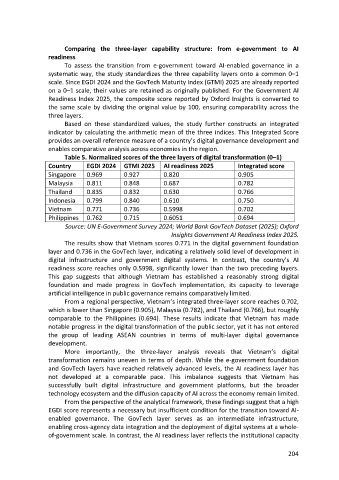
                        Table 5. Normalized scores of the three layers of digital transformation (0–1)
                  Country       EGDI 2024    GTMI 2025     AI readiness 2025         Integrated score
                  Singapore     0.969        0.927         0.820                     0.905
                  Malaysia      0.811        0.848         0.687                     0.782
                  Thailand      0.835        0.832         0.630                     0.766
                  Indonesia     0.799        0.840         0.610                     0.750
                  Vietnam       0.771        0.736         0.5998                    0.702
                  Philippines   0.762        0.715         0.6051                    0.694
                        Source: UN E-Government Survey 2024; World Bank GovTech Dataset (2025); Oxford
                                                             Insights Government AI Readiness Index 2025.
                        The results show that Vietnam scores 0.771 in the digital government foundation
                  layer and 0.736 in the GovTech layer, indicating a relatively solid level of development in
                  digital infrastructure and government digital systems. In contrast, the country’s AI
                  readiness score reaches only 0.5998, significantly lower than the two preceding layers.
                  This gap suggests that although Vietnam has established a reasonably strong digital
                  foundation and made progress in GovTech implementation, its capacity to leverage
                  artificial intelligence in public governance remains comparatively limited.
                        From a regional perspective, Vietnam’s integrated three-layer score reaches 0.702,
                  which is lower than Singapore (0.905), Malaysia (0.782), and Thailand (0.766), but roughly
                  comparable to the Philippines (0.694). These results indicate that Vietnam has made
                  notable progress in the digital transformation of the public sector, yet it has not entered
                  the group of leading ASEAN countries in terms of multi-layer digital governance
                  development.
                        More importantly, the three-layer analysis reveals that Vietnam’s digital
                  transformation remains uneven in terms of depth. While the e-government foundation
                  and GovTech layers have reached relatively advanced levels, the AI readiness layer has
                  not developed at a comparable pace. This imbalance suggests that Vietnam has
                  successfully built digital infrastructure and government platforms, but the broader
                  technology ecosystem and the diffusion capacity of AI across the economy remain limited.
                        From the perspective of the analytical framework, these findings suggest that a high
                  EGDI score represents a necessary but insufficient condition for the transition toward AI-
                  enabled governance. The GovTech layer serves as an intermediate infrastructure,
                  enabling cross-agency data integration and the deployment of digital systems at a whole-
                  of-government scale. In contrast, the AI readiness layer reflects the institutional capacity


                                                                                                      204

