


Page 178 - ISC PROCEEDINGS 21.4
P. 178
specification employs Driscoll–Kraay (1998) standard errors (xtscc, lag l = 3),
                  simultaneously robust to heteroskedasticity, serial autocorrelation, and spatial
                  dependence. Results are presented in parallel for OLS, cluster-robust, and Driscoll–Kraay
                  standard errors. To address reverse causality, we employ two-step System GMM
                  (Arellano & Bond, 1991; Blundell & Bond, 1998) via xtabond2 (Roodman, 2009) with a
                  collapsed instrument set (36 instruments) and Windmeijer-corrected standard errors.
                        4. Results
                        4.1. Baseline: U-shaped internet–inequality relationship
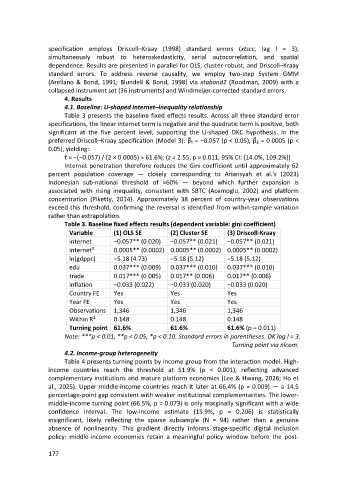
                        Table 3 presents the baseline fixed effects results. Across all three standard error
                  specifications, the linear internet term is negative and the quadratic term is positive, both
                  significant at the five percent level, supporting the U-shaped DKC hypothesis. In the
                                                                    ̂
                                                                                           ̂
                  preferred Driscoll–Kraay specification (Model 3): β₁ = −0.057 (p < 0.05), β₂ = 0.0005 (p <
                  0.05), yielding:
                        τ̂ = −(−0.057) / (2 × 0.0005) ≈ 61.6%; (z = 2.55, p = 0.011, 95% CI: [14.0%, 109.2%])
                        Internet penetration therefore reduces the Gini coefficient until approximately 62
                  percent population coverage — closely corresponding to Ariansyah et al.'s (2023)
                  Indonesian sub-national threshold of ≈60% — beyond which further expansion is
                  associated with rising inequality, consistent with SBTC (Acemoglu, 2002) and platform
                  concentration (Piketty, 2014). Approximately 38 percent of country-year observations
                  exceed this threshold, confirming the reversal is identified from within-sample variation
                  rather than extrapolation.
                        Table 3. Baseline fixed effects results (dependent variable: gini coefficient)
                         Variable        (1) OLS SE          (2) Cluster SE      (3) Driscoll-Kraay
                         internet        −0.057** (0.020)    −0.057** (0.021)    −0.057** (0.021)
                         internet²       0.0005** (0.0002) 0.0005** (0.0002) 0.0005** (0.0002)
                         ln(gdppc)       −5.18 (4.73)        −5.18 (5.12)        −5.18 (5.12)
                         edu             0.037*** (0.009)    0.037*** (0.010)    0.037*** (0.010)
                         trade           0.017*** (0.005)    0.017** (0.006)     0.017** (0.006)
                         inflation       −0.033 (0.022)      −0.033 (0.020)      −0.033 (0.020)
                         Country FE      Yes                 Yes                 Yes
                         Year FE         Yes                 Yes                 Yes
                         Observations    1,346               1,346               1,346
                         Within R²       0.148               0.148               0.148
                         Turning point 61.6%                 61.6%               61.6% (p = 0.011)
                        Note: ***p < 0.01, **p < 0.05, *p < 0.10. Standard errors in parentheses. DK lag l = 3.
                                                                                  Turning point via nlcom.
                        4.2. Income-group heterogeneity
                        Table 4 presents turning points by income group from the interaction model. High-
                  income countries reach the threshold at 51.9% (p < 0.001), reflecting advanced
                  complementary institutions and mature platform economies (Lee & Hwang, 2026; Ho et
                  al., 2025). Upper middle-income countries reach it later at 66.4% (p = 0.009) — a 14.5
                  percentage-point gap consistent with weaker institutional complementarities. The lower-
                  middle-income turning point (66.5%, p = 0.073) is only marginally significant with a wide
                  confidence interval. The low-income estimate (15.9%, p = 0.206) is statistically
                  insignificant, likely reflecting the sparse subsample (N = 94) rather than a genuine
                  absence of nonlinearity. This gradient directly informs stage-specific digital inclusion
                  policy: middle-income economies retain a meaningful policy window before the post-

                  177

