


Page 403 - ISC PROCEEDINGS 21.4
P. 403
ability to interpret technological information and navigate increasingly complex digital
                  environments.
                        Digital customers, in turn, act as active participants in the innovation ecosystem
                  rather than passive recipients of technological change. Their evolving preferences, social
                  interactions, and experiential feedback generate market signals that influence
                  institutional priorities and educational agendas.


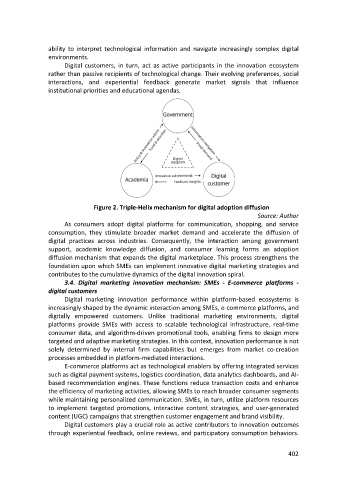
                                  Figure 2. Triple-Helix mechanism for digital adoption diffusion
                                                                                            Source: Author
                        As consumers adopt digital platforms for communication, shopping, and service
                  consumption, they stimulate broader market demand and accelerate the diffusion of
                  digital practices across industries. Consequently, the interaction among government
                  support, academic knowledge diffusion, and consumer learning forms an adoption
                  diffusion mechanism that expands the digital marketplace. This process strengthens the
                  foundation upon which SMEs can implement innovative digital marketing strategies and
                  contributes to the cumulative dynamics of the digital innovation spiral.
                        3.4. Digital marketing innovation mechanism: SMEs - E-commerce platforms -
                  digital customers
                        Digital marketing innovation performance within platform-based ecosystems is
                  increasingly shaped by the dynamic interaction among SMEs, e-commerce platforms, and
                  digitally empowered customers. Unlike traditional marketing environments, digital
                  platforms provide SMEs with access to scalable technological infrastructure, real-time
                  consumer data, and algorithm-driven promotional tools, enabling firms to design more
                  targeted and adaptive marketing strategies. In this context, innovation performance is not
                  solely determined by internal firm capabilities but emerges from market co-creation
                  processes embedded in platform-mediated interactions.
                        E-commerce platforms act as technological enablers by offering integrated services
                  such as digital payment systems, logistics coordination, data analytics dashboards, and AI-
                  based recommendation engines. These functions reduce transaction costs and enhance
                  the efficiency of marketing activities, allowing SMEs to reach broader consumer segments
                  while maintaining personalized communication. SMEs, in turn, utilize platform resources
                  to implement targeted promotions, interactive content strategies, and user-generated
                  content (UGC) campaigns that strengthen customer engagement and brand visibility.
                        Digital customers play a crucial role as active contributors to innovation outcomes
                  through experiential feedback, online reviews, and participatory consumption behaviors.


                                                                                                      402

