


Page 635 - ISC PROCEEDINGS 21.4
P. 635
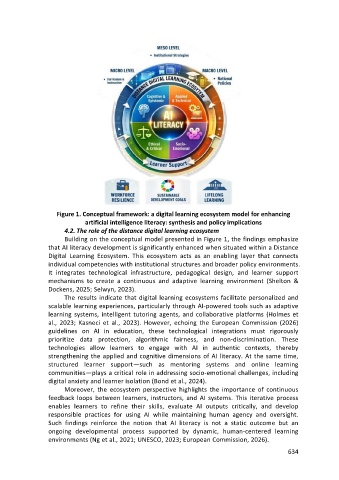
Figure 1. Conceptual framework: a digital learning ecosystem model for enhancing
                               artificial intelligence literacy: synthesis and policy implications
                        4.2. The role of the distance digital learning ecosystem
                        Building on the conceptual model presented in Figure 1, the findings emphasize
                  that AI literacy development is significantly enhanced when situated within a Distance
                  Digital Learning Ecosystem. This ecosystem acts as an enabling layer that connects
                  individual competencies with institutional structures and broader policy environments.
                  It integrates technological infrastructure, pedagogical design, and learner support
                  mechanisms to create a continuous and adaptive learning environment (Shelton &
                  Dockens, 2025; Selwyn, 2023).
                        The results indicate that digital learning ecosystems facilitate personalized and
                  scalable learning experiences, particularly through AI-powered tools such as adaptive
                  learning systems, intelligent tutoring agents, and collaborative platforms (Holmes et
                  al., 2023; Kasneci et al., 2023). However, echoing the European Commission (2026)
                  guidelines on AI in education, these technological integrations must rigorously
                  prioritize data protection, algorithmic fairness, and non-discrimination. These
                  technologies allow learners to engage with AI in authentic contexts, thereby
                  strengthening the applied and cognitive dimensions of AI literacy. At the same time,
                  structured learner support—such as mentoring systems and online learning
                  communities—plays a critical role in addressing socio-emotional challenges, including
                  digital anxiety and learner isolation (Bond et al., 2024).
                        Moreover, the ecosystem perspective highlights the importance of continuous
                  feedback loops between learners, instructors, and AI systems. This iterative process
                  enables learners to refine their skills, evaluate AI outputs critically, and develop
                  responsible practices for using AI while maintaining human agency and oversight.
                  Such findings reinforce the notion that AI literacy is not a static outcome but an
                  ongoing developmental process supported by dynamic, human-centered learning
                  environments (Ng et al., 2021; UNESCO, 2023; European Commission, 2026).

                                                                                                      634

