


Page 625 - ISC PROCEEDINGS 21.4
P. 625
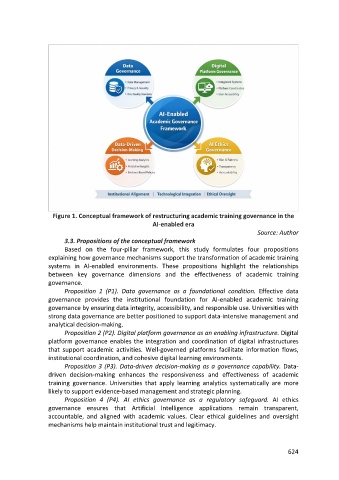
Figure 1. Conceptual framework of restructuring academic training governance in the
                                                       AI-enabled era
                                                                                           Source: Author
                        3.3. Propositions of the conceptual framework
                        Based on the four-pillar framework, this study formulates four propositions
                  explaining how governance mechanisms support the transformation of academic training
                  systems in AI-enabled environments. These propositions highlight the relationships
                  between key governance dimensions and the effectiveness of academic training
                  governance.
                        Proposition 1 (P1). Data governance as a foundational condition. Effective data
                  governance provides the institutional foundation for AI-enabled academic training
                  governance by ensuring data integrity, accessibility, and responsible use. Universities with
                  strong data governance are better positioned to support data-intensive management and
                  analytical decision-making.
                        Proposition 2 (P2). Digital platform governance as an enabling infrastructure. Digital
                  platform governance enables the integration and coordination of digital infrastructures
                  that support academic activities. Well-governed platforms facilitate information flows,
                  institutional coordination, and cohesive digital learning environments.
                        Proposition 3 (P3). Data-driven decision-making as a governance capability. Data-
                  driven decision-making enhances the responsiveness and effectiveness of academic
                  training governance. Universities that apply learning analytics systematically are more
                  likely to support evidence-based management and strategic planning.
                        Proposition 4 (P4). AI ethics governance as a regulatory safeguard. AI ethics
                  governance ensures that Artificial Intelligence applications remain transparent,
                  accountable, and aligned with academic values. Clear ethical guidelines and oversight
                  mechanisms help maintain institutional trust and legitimacy.


                                                                                                      624

