

AI4SDF 2026 · Hanoi Open University · Call for Papers open

2nd International Conference on Artificial Intelligence & Data Science for a Sustainable Digital Future

An international forum bringing together scholars, policymakers and industry experts to examine how AI and data science can be built, governed and applied so that the digital future is a sustainable one.

  • Date12 December 2026
  • VenueHanoi, Vietnam
  • FormatHybrid
  • LanguageEnglish
00days
:
00hours
:
00minutes
:
00seconds

until the opening session, 08:30 ICT

01 About the conference

A timely forum for responsible innovation

Hanoi Open University is pleased to announce the 2nd International Conference on Artificial Intelligence and Data Science for a Sustainable Digital Future (AI4SDF 2026).

The conference brings together scholars, policymakers and industry experts to share interdisciplinary insights and discuss cutting-edge applications of AI and data science in promoting sustainability across education, healthcare, agriculture, environment and governance.

Its scope spans the most recent shifts in the field: agentic AI and multi-agent systems, new-generation large language models, multimodal and generative AI, all read against the requirements of sustainable development, innovation and national digital transformation. Alongside the technology, AI4SDF 2026 gives equal weight to consequences: the labour market, higher education, and the ethics and governance of responsible AI.

The conference is also a standing opportunity to build and strengthen an annual network of cooperation among universities and research institutes in Vietnam and abroad, and to put forward concrete policy recommendations on responsible AI development, data security and the legal frameworks needed to keep AI deployment transparent and equitable.

02 Key themes

Five tracks, one question

How do we build AI and data systems that are powerful enough to matter and accountable enough to trust? Select a track to see its suggested topics.

T1 AI & Data Science in the Sustainable Digital Era

Emerging technologies; AI and the UN Sustainable Development Goals; global and Vietnamese case studies for sustainability.

  • Agentic AI and multi-agent systems
  • New-generation large language models and multimodal AI
  • From assistive tool to autonomous agent: AI's shifting role in society and the digital economy
  • Applied LLMs: retrieval-augmented generation, fine-tuning and production deployment
  • Vietnam in the global picture: opportunities and adoption pathways
T2 Applications Across the Pillars of Sustainability

Environmental, social and economic sustainability, including sustainable agriculture and green supply chains.

  • AI as innovation infrastructure: productivity, digital products and services
  • Smart agriculture, renewable energy, sustainable urban management, environmental monitoring
  • Green AI: energy cost and carbon footprint of large models; energy-efficient computation
  • Data-driven business models and digital transformation for SMEs
  • AI for healthcare, public services and inclusive development
T3 AI for Sciences & Predictive Analytics

Scientific machine learning and forecasting under real-world constraints.

  • Spatio-temporal analytics with graph neural networks and transformers
  • Green supply-chain forecasting
  • Generative AI for advanced materials
  • Scientific data pipelines, benchmarking and reproducibility
T4 Digital Twins & Smart IoT Systems

Intelligence at the edge, and the systems that keep it trustworthy.

  • Edge AI and TinyML
  • Zero-trust IoT and blockchain security
  • Smart-city and smart-grid digital twins
  • Sensing, simulation and closed-loop control for sustainable infrastructure
T5 Ethics, Challenges, and Responsible AI

Algorithmic bias, data privacy, social justice, AI and data science skills, and the legal and ethical frameworks for responsible deployment.

  • Cybersecurity in the age of AI: AI as both defensive and offensive instrument
  • National data sovereignty: data governance, digital infrastructure and data-residency policy
  • Responsible AI governance: transparency, traceability and the protection of civic rights
  • AI and the labour market: jobs displaced, jobs created, jobs transformed
  • Future skills and the university's role: curriculum reform, AI-integrated teaching, smart governance
  • Academic integrity and intellectual property in the era of generative AI

Submissions that cut across tracks are welcome; indicate your preferred track at submission and the programme committee will route the paper accordingly.

03 Important dates

The road to 12 December

All deadlines are 23:59 Indochina Time (UTC+7).

  1. 30 October 2026 Full paper submission deadline Complete manuscripts in English, submitted through the conference channel.
  2. 1–15 November 2026 Acceptance notifications Review outcomes and revision requests are sent to corresponding authors.
  3. 28 November 2026 Registration deadline Registration must be completed for a paper to appear in the proceedings.
  4. 12 December 2026 Conference day Plenary and parallel sessions, on site in Hanoi and online.

04 Invited speakers

Voices from across the region

Three plenary reports open the conference. Two speakers are confirmed.

Portrait of Assoc. Prof. Ria Mae H. Borromeo

Philippines

Assoc. Prof. Ria Mae H. Borromeo, PhD

University of the Philippines Open University

Associate Professor working on information systems, data science and institutional digital transformation, with a PhD in Engineering (Computer Science) from Keio University. She serves as Assistant to the Chancellor for Institutional Analytics and Insights and as Data Protection Officer at UPOU, and chairs the Organizing Committee of the ICDE World Conference 2027. Her research on crowdsourcing, human–AI collaboration and data governance has appeared in IEEE TKDE, The VLDB Journal, ACM PACM HCI and ACM SIGMOD Record.
  • Human–AI collaboration
  • Data governance
  • Institutional analytics
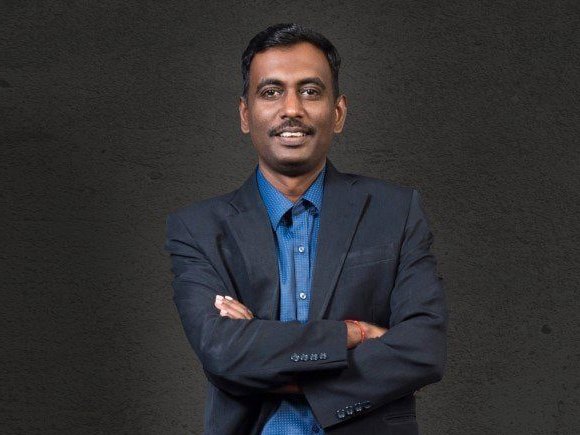
Portrait of Prof. Dr. Nantha Kumar Subramaniam

Malaysia

Prof. Dr. Nantha Kumar Subramaniam

Dean, Faculty of Computing and Analytics, Open University Malaysia

Professor and Dean at Open University Malaysia, and formerly Adviser on Technology-enabled Learning at the Commonwealth of Learning in Canada. His work builds AI-powered feedback systems, educational chatbots and adaptive learning environments for open and distance learning, and he authored the Malaysia case study for the UNESCO Global Education Monitoring Report. He is a two-time winner of the SEAMEO–Jasper Research Award and a repeat gold medallist of the Asian Association of Open Universities.

  • Generative AI in education
  • Adaptive learning
  • Open & distance learning

To be announced

Third plenary speaker

Announcement expected ahead of the registration deadline

The programme committee is finalising the third plenary report. Details will be published here and circulated to registered participants.

05 Programme

One day, two rhythms

A plenary morning that sets the agenda, then parallel thematic sessions where the detailed work happens. Provisional schedule; times are Indochina Time (UTC+7).

Opening

Registration and reception of delegates

Plenary session

Opening statement and introduction of delegates

Opening address

Keynote reports

  • Keynote report 1
  • Keynote report 2
  • Keynote report 3

Group photograph and coffee break

Morning parallel sessions

Thematic paper presentations

Discussion

Session summary

Lunch break

Afternoon parallel sessions

Thematic paper presentations

Discussion

Session summary and closing ceremony

06 Publication

Where your paper goes after the conference

Conference proceedings

All accepted and registered papers are published in the conference proceedings.

DOI from CrossRef

Every paper is assigned a digital object identifier, so it stays citable and findable.

Google Scholar indexing

The proceedings are submitted to Google Scholar for indexing.

ISBN

The proceedings are published in soft form with an ISBN.

07 For authors

Bring original research.
Bring it in English.

Welcome, and thank you for your interest in the 2nd International Conference on Artificial Intelligence and Data Science for a Sustainable Digital Future. Papers are submitted through Microsoft CMT; full manuscripts are due 30 October 2026.

01

Prepare a full paper

Unpublished, original work in English, written on the conference template below.

02

Submit through CMT by 30 Oct 2026

Everything goes through Microsoft CMT; the steps are set out below.

03

Register by 28 Nov 2026

Registration is required for an accepted paper to appear in the proceedings.

Paper template & author guidelines

The official Word template, with the formatting rules, section structure and a worked reference list already in place. Write straight into it.

  • Englishmanuscript language
  • 8–15 pagesresearch paper
  • up to 20 pagessurvey paper
  • 70–200 wordsabstract
Download template

How to submit through Microsoft CMT

Prepare the manuscript on the template above first, then work through the steps below.

  1. Sign in to Microsoft CMT, or create an account if you do not have one yet.
  2. Open the AI4SDF 2026 page and select Create new submission. cmt3.research.microsoft.com/AISDF2026
  3. Enter the paper title, abstract, keywords and author information carefully.
  4. Select the most appropriate conference track for your paper.
  5. Upload your manuscript, prepared according to the AI4SDF 2026 template.
  6. Review all submission information before clicking Submit.

The link in step 2 opens AI4SDF 2026 directly. Without it you would have to find the conference by name in the CMT list, so keep it to hand once your account is ready.

Authors may update their submission through CMT until the submission deadline. Please ensure that all authors and their affiliations are entered correctly.

We look forward to receiving your contribution and welcoming you to AI4SDF 2026 in Hanoi, Vietnam. We encourage you to invite colleagues to participate and submit original research.

08 Venue & format

In Hanoi, and everywhere else

Hanoi Open University

Hanoi, Vietnam (specific venue to be announced)

The conference is held on site at Hanoi Open University and streamed for remote participants.

On site
Hanoi Open University. Exact hall announced with the final programme
Online
Joining details are sent to registered participants before the event
Delegates
120 expected: 100 from Vietnam, 20 from abroad, 5 of them in person
Working day
08:30 – 16:00 Indochina Time, plenary followed by parallel sessions
hou.edu.vn
Format

Hybrid

In-person and virtual attendance combined.

Language

English

Presentations, papers and proceedings.

Date

12 Dec 2026

08:30 – 16:00 Indochina Time.

09 Organisation

Who is behind AI4SDF 2026

Host institution

Hanoi Open University

Under the Ministry of Education and Training, Socialist Republic of Vietnam.

Academic lead

Faculty of Information Technology

Focal point for the scientific programme of the conference.

Coordination

Department of Science Management and International Cooperation

Licensing, organising committee and international liaison.